
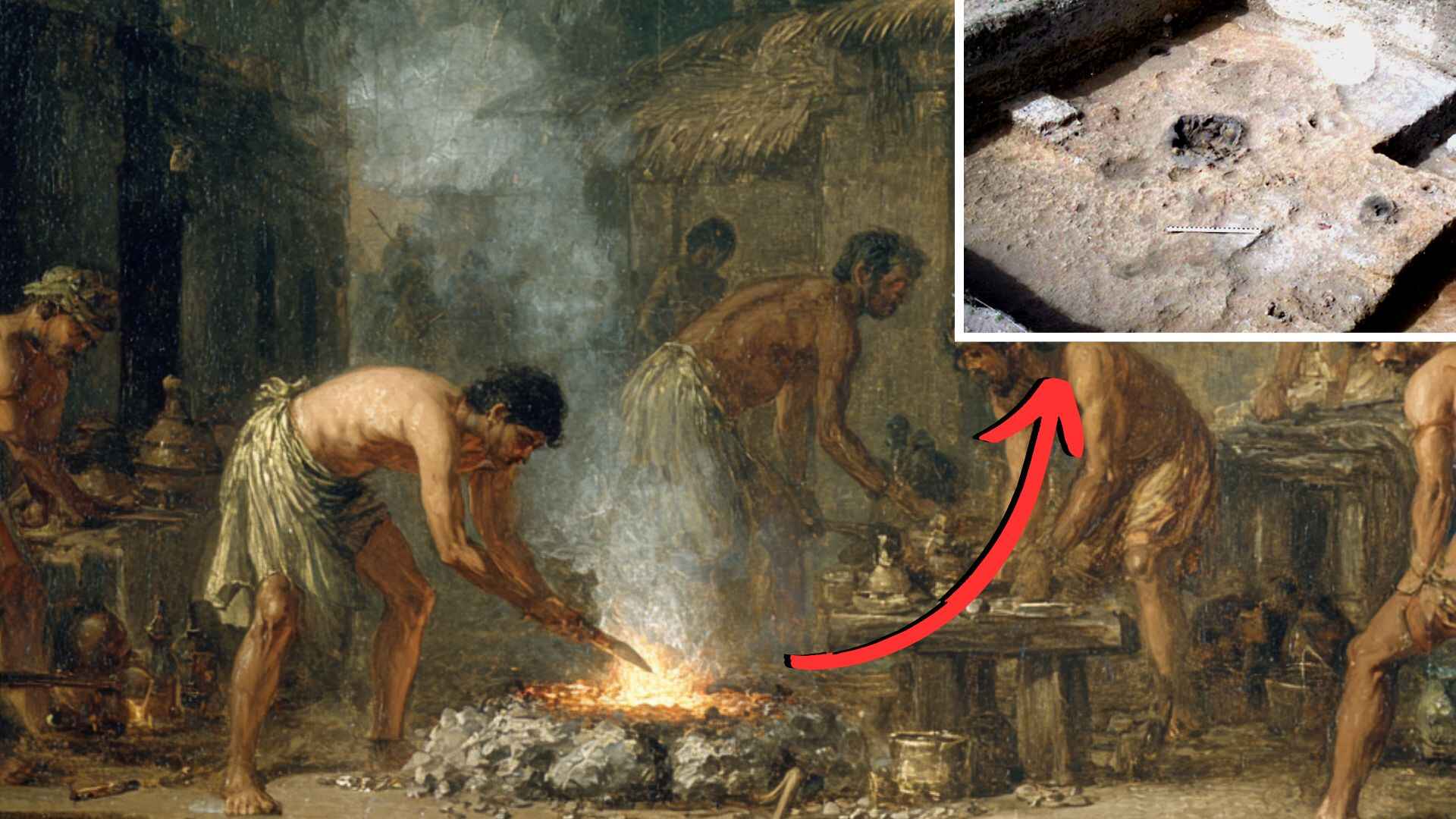
For decades, southern India’s soil has been giving up stunning secrets. Archaeologists in Tamil Nadu have uncovered early writing that rewrote literacy timelines, charted ancient maritime trade routes, and revealed advanced urban settlements, reinforcing the region’s reputation as a cradle of early civilization. Now, a rust-colored iron fragment pulled from a burial urn in Tamil Nadu may be the most astonishing find yet – evidence of ironworking 5,000 years ago. This discovery, radiocarbon-dated to around 3000–3300 BCE, could represent the world’s oldest known iron artifact, a find that is reshaping what we know about the Iron Age.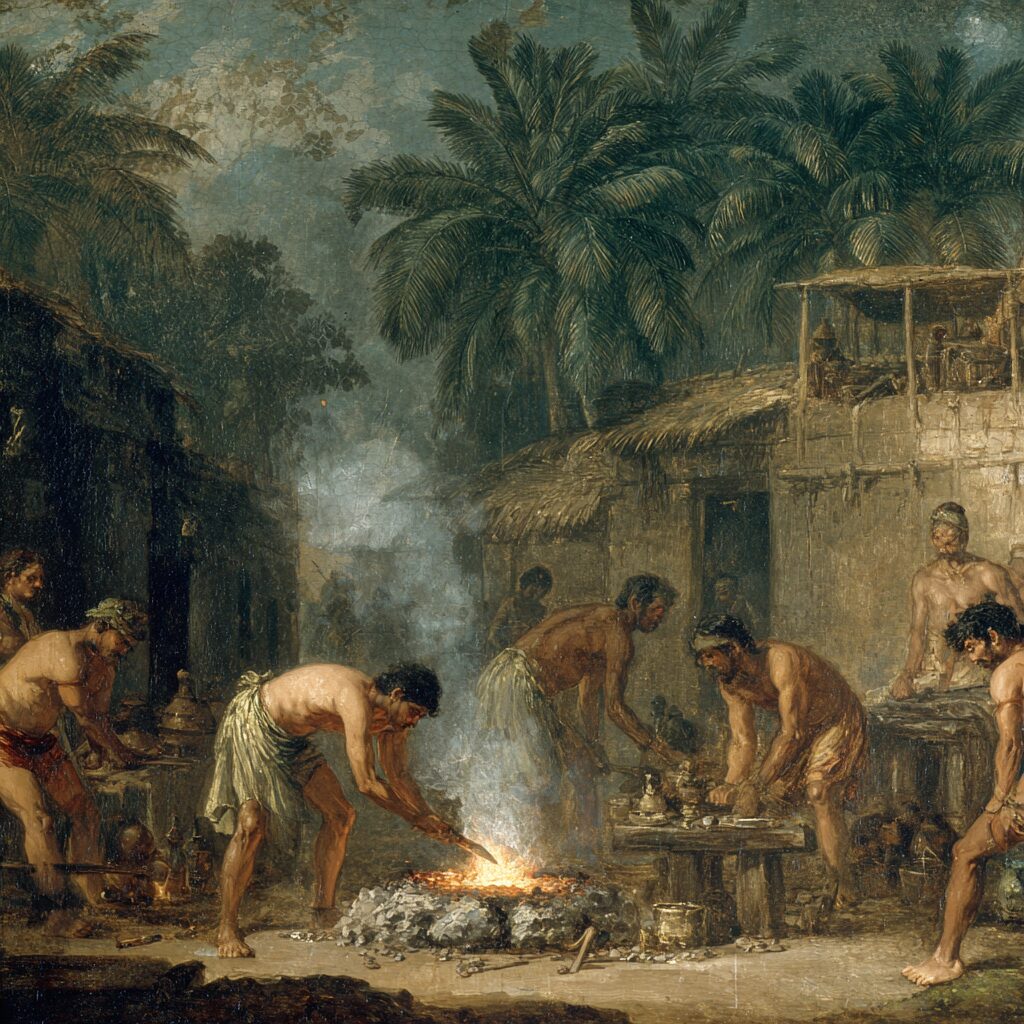
A Buried Secret in Tamil Nadu’s Soil
In a quiet village in Tamil Nadu, India, archaeologists unearthed a burial urn containing ancient grave goods – including a small iron tool encrusted with millennia of rust. Two charcoal samples found alongside iron objects in the urn were sent for advanced dating. The results came back with staggering ages: 3,345 BCE and 3,259 BCE. In other words, people in this corner of India were using iron over 5,300 years ago, a thousand years earlier than previously thought.
Such dates place Tamil Nadu’s iron firmly in the 4th millennium BCE, contemporary with the late Indus Valley Civilization (3300–1300 BCE) – a time when most of the world was still in the Copper or Bronze Age. Before this find, historians believed ironworking first took off in the Near East. The ancient Hittites of Anatolia, for example, were long credited as pioneers of iron around c. 1300–1200 BCE. Yet the Tamil Nadu artifact predates the Hittites by nearly 2,000 years. Chief Minister M.K. Stalin, releasing the report Antiquity of Iron: Recent Radiometric Dates from Tamil Nadu, proclaimed that history “must begin here” – suggesting the Indian subcontinent’s Iron Age can “no longer overlook Tamil Nadu”.
Aerial view of an Iron Age burial site in Tamil Nadu (Mayiladumparai). Hundreds of such burials with urns and grave goods have been excavated, pushing the region’s iron-working history back to around 3000–3300 BCE.
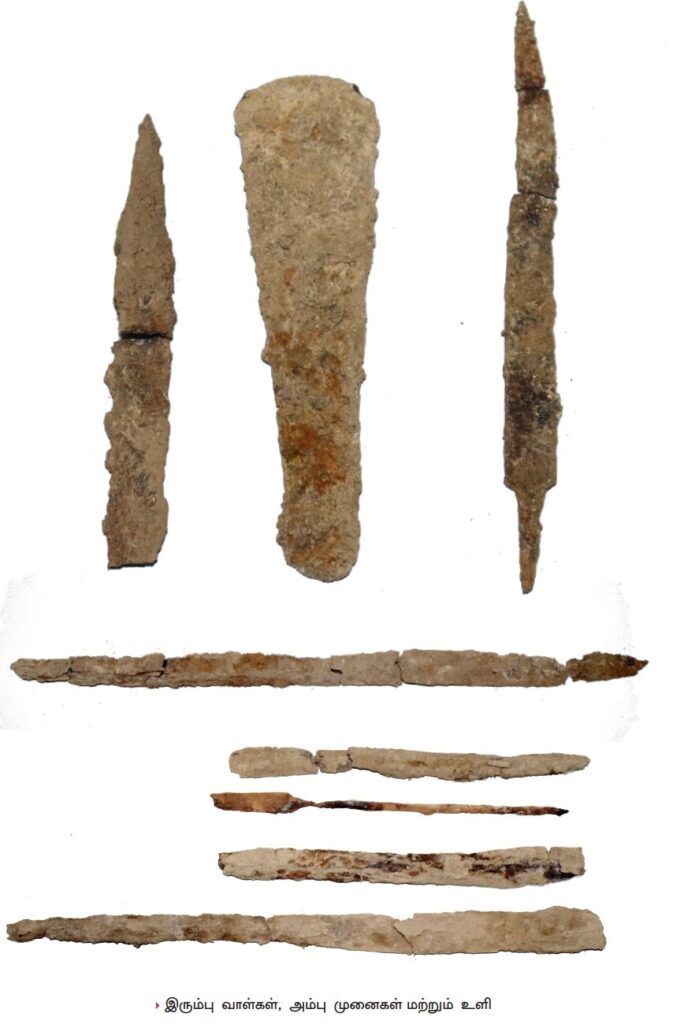
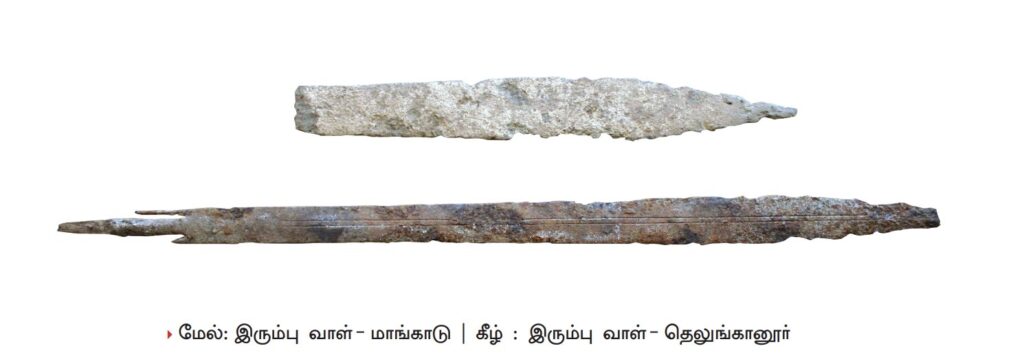
The game-changing evidence comes from several archaeological sites across Tamil Nadu. At Sivagalai in Thoothukudi District, one urn burial alone yielded over 85 iron objects – knives, arrowheads, rings, chisels, axes, and even swords – both inside and around the urns. Multiple samples from Sivagalai were dated using Accelerator Mass Spectrometry (AMS) for charcoal and Optically Stimulated Luminescence (OSL) for pottery. Out of 11 dates obtained, six were earlier than 2400 BCE. Nearby at Adichanallur, another famous burial site, a charcoal sample linked with an iron artifact was dated to 2517 BCE. Taken together, the evidence suggests that inhabitants of ancient Tamil Nadu were adept at making and using iron tools as far back as 3300 BCE.
Radiocarbon Dating Rewrites the Timeline
To verify these extraordinary ages, Tamil Nadu’s archaeologists turned to labs around the world. Charcoal flecks from the burial strata – the charred remnants of ancient funerary fires or iron-smelting furnaces – were radiocarbon dated at facilities in the US and India. All returned consistent results in the mid-4th to early-3rd millennium BCE, converging around 3000 BCE. “They all dated the objects to around the same period,” Stalin noted, referring to the concordant ages from Beta Analytic (USA), the Physical Research Laboratory (Ahmedabad), and the Birbal Sahni Institute (Lucknow). These are solid, cross-checked dates that left little doubt about the artifact’s antiquity.
Such findings amount to a paradigm shift in archaeology. Traditionally, South Asia’s Iron Age was thought to begin around 1000 BCE, well after the decline of the Indus cities. The earliest iron in India had been a few bronze-age artifacts and some tools dated to 1800 BCE in the Ganges Valley. Even a 2022 discovery in Tamil Nadu’s Mayiladumparai site, dated to 2172 BCE, was hailed as a breakthrough at the time. Now, the Sivagalai and Adichanallur dates push Indian ironworking back by another millennium or more.
Globally, the timeline for iron technology is also being reconsidered. Until now, scholars believed that true iron smelting began in the late 3rd to early 2nd millennium BCE. For instance, excavations at Kaman-Kalehöyük in Turkey found the earliest known smelted iron fragments, dated to ~2200–2000 BCE. These Anatolian iron pieces contained carbon but little nickel, proving they were made from terrestrial ore (smelted) rather than meteorites. A few other sites hinted at sporadic iron working after ~2500 BCE, but it was not until around 1200 BCE (the start of the traditional Iron Age) that iron tools became common. That’s why a date like 3300 BCE for smelted iron in India is astonishing – it pre-dates the known “official” Iron Age by some 1,700 years.
“As far as world archaeology is concerned, this is huge,” says Dilip Kumar Chakrabarti, emeritus professor of South Asian archaeology at Cambridge. “For the first time in the world, smelted iron has been dated back to the middle of the third millennium BCE”, he notes. To appreciate how far our understanding has come, Chakrabarti points out that a few decades ago we didn’t imagine iron in India before the 6th century BCE – but now we have evidence from the 25th century BCE. Such leaps in chronology are exceedingly rare, making this a discovery of international significance.
From Sky Metal to Furnace Metal: Meteoric vs. Smelted Iron
Iron is everywhere on Earth, but extracting it from ore is a technical challenge that ancient peoples struggled with for millennia. Early societies first encountered iron in a ready-made form – meteorites that fell from the sky. These nickel-rich iron meteorites could be cold-worked into tools or ornaments without any furnace. Indeed, the earliest known iron artifacts on record are a set of nine small beads from burials in Gerzeh, Egypt, dating to around 3200 BCE. Chemical analysis shows these beads were made of meteoritic iron, hammered into thin sheets and rolled into tubes. They were so exotic that they were strung alongside gold and semi-precious stones, treasured as heavenly metal. Many other isolated iron items from the Bronze Age – a dagger from Alaca Höyük (Turkey, ~2500 BCE), a pendant from Syria (~2300 BCE), even the famous iron dagger buried with Pharaoh Tutankhamun (~1350 BCE) – have all been confirmed as extraterrestrial iron as well. In short, before true iron smelting was invented, nearly all iron artifacts came from the sky.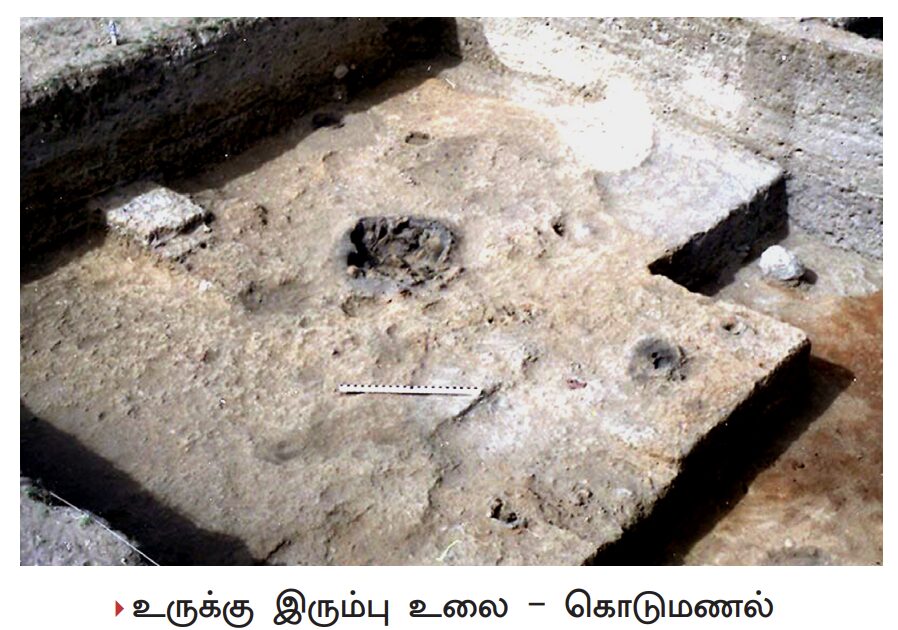
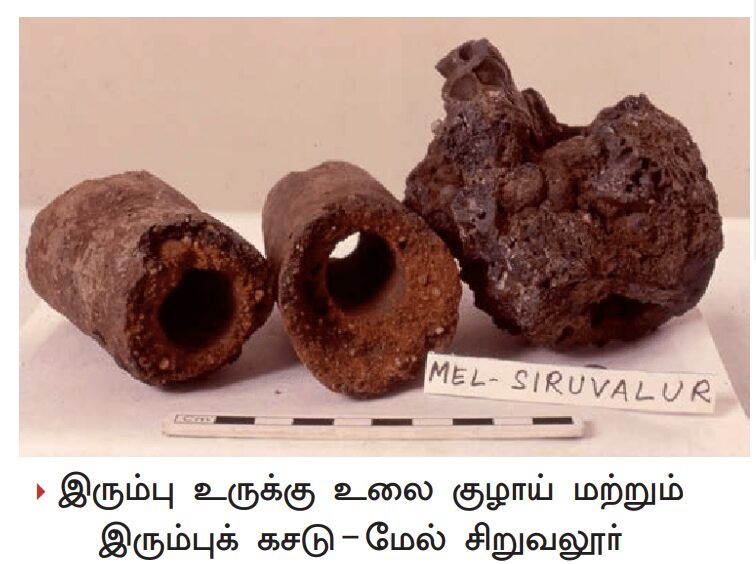
Transforming abundant earthly iron ore into metal, however, was a far greater leap in technology. Identifying iron-rich rocks is only the first step. Ancient metalworkers then had to invent a furnace that could reach extremely high temperatures – on the order of 1200 °C or more – to smelt the ore. Smelting is a complex chemical process: the iron oxides in the ore must be reduced, meaning oxygen is stripped away, typically by burning charcoal (carbon) in a low-oxygen kiln. This yields metallic iron – a material far tougher to work than copper or bronze. Unlike bronze, molten iron requires such heat that early smiths could not cast it into molds; they had to wrought-forge the spongy blooms of iron by hammering while hot. Mastering these steps was no simple task:
- Ore location & preparation: Early engineers needed to recognize iron ore in nature (often reddish rocks like hematite) and mine or collect it. The ore had to be broken into pieces and sometimes pre-heated or roasted.
- High-temperature furnaces: They had to design furnaces or bloomeries that could sustain very high heat with a steady draft of air. Clay or brick furnaces fueled by charcoal were used to create a reducing environment.
- Smelting process: Within the furnace, charcoal stripped oxygen from the ore, leaving behind lumps of glowing metallic iron plus waste slag. The process demanded careful control – too much air and the iron re-oxidizes; too little and the temperature falls short.
- Forging and shaping: The extracted iron was initially a soft, white-hot bloom that had to be quickly hammered and folded to drive out slag and weld the metal together. Through repeated forging, ancient smiths could shape tools, weapons, and implements.
Achieving all this in the Chalcolithic era (Copper Age) would have required exceptional ingenuity. The Tamil Nadu evidence implies that somewhere by 3300 BCE, artisans in South India had unlocked this metallurgical secret. As archaeologist Parth R. Chauhan notes, such early ironworking likely “emerged independently in multiple regions” rather than spreading from a single source. Indeed, if the dates hold true, the early Tamils appear as pioneers, developing furnace technology and iron metallurgy long before their time.
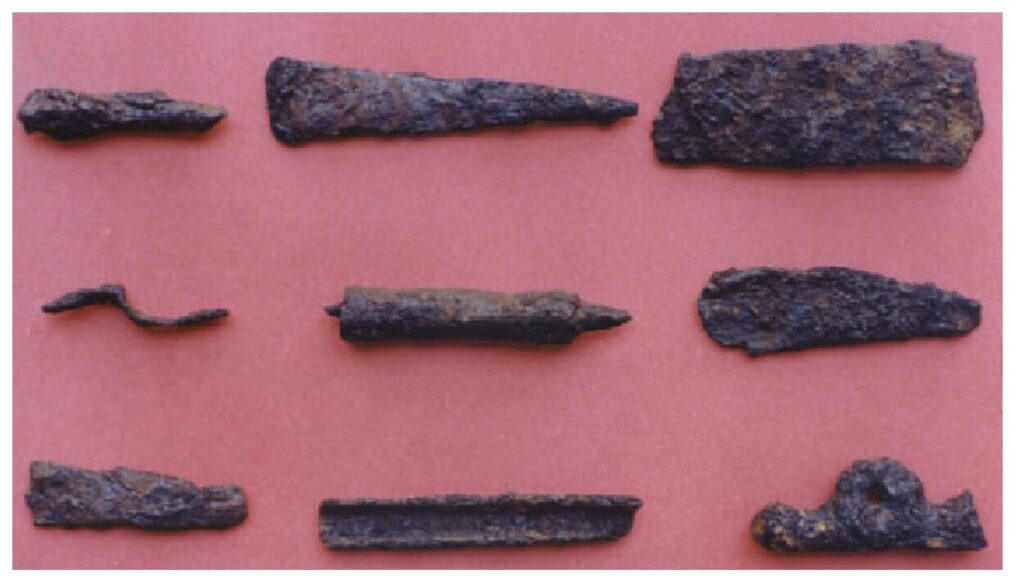
A selection of iron artifacts (spear and arrow heads, knives and implements) excavated from ancient burials in Tamil Nadu. Radiocarbon dating of associated remains indicates these tools are over 5,000 years old – potentially the earliest smelted iron objects known.
A Technological Marvel in Ancient Tamil Society
What would it mean for a society to have iron tools so early? For the ancient Tamils, it could have been revolutionary. Iron tools are harder and stronger than copper or bronze, making them ideal for clearing dense forests, plowing tough soils, and crafting durable weapons. The presence of iron may have given south Indian communities a head start in agriculture and warfare – potentially allowing larger settlements or competitive advantages. It’s notable that the Tamil region lacks rich copper deposits; scholars speculate that necessity drove innovation. “When [northern] cultural zones experienced the Copper Age, the region south of the Vindhyas might have entered the Iron Age due to limited availability of exploitable copper ore,” the report by K. Rajan and R. Sivananthan explains. In other words, faced with a paucity of copper, the Tamil metallurgists engineered an alternative: iron.
The archaeological record shows that by the second millennium BCE, South India’s ironworking was not only well-established, but highly advanced. In the recent excavations, archaeologists uncovered the remains of an ancient iron-smelting furnace at a site called Kodumanal in Tamil Nadu. The soil around it was bleached white from intense heat, and chunks of slag (the glassy waste of smelting) were still fused to the furnace walls. This indicates an “advanced iron-making community”, as archaeologist Oishi Roy observes – people who were producers, not just users, of iron. They understood the craft well enough to build dedicated metallurgy workshops. By around 1400–1200 BCE, Indian smiths were even producing early steel. Historian Osmund Bopearachchi highlights an iron sword found in a Tamil Nadu burial which turned out to be made of ultra-high-carbon steel, dating to the 13th–15th century BCE. This is essentially early steel, requiring precise control of carbon content and furnace conditions – a technology on par with the best Hittite or later Iron Age metalwork. “The radiometric dates seem to prove that the Tamil Nadu samples are earlier,” Bopearachchi notes, referring to how this predates the first Hittite steel by a century or more. Such finds underscore that the region’s metalworkers were remarkably sophisticated engineers for their time.
Culturally, the discovery also sheds new light on South India’s prehistoric society. The fact that dozens of iron tools were found in burials – including weapons like swords, spears and arrows – suggests these objects were of high value, possibly status symbols or grave offerings to accompany the dead. The people interred in urns at sites like Sivagalai and Adichanallur may have been warriors or community leaders equipped with prized iron implements. The burials themselves, often marked by stone circles or cairns in the soil (part of a widespread megalithic tradition), indicate a complex ritual culture. Some of the Tamil urn burials have also yielded inscribed pottery and symbols. Intriguingly, more than 90% of the ancient graffiti marks at these sites have similarities to symbols of the Indus Valley script. This raises tantalizing questions: did the southern Iron Age culture interact with or parallel the northern Indus civilization? Tamil Nadu’s state archaeologists have begun to argue that the Iron Age in the south ran concurrently with the Bronze Age of Indus, rather than sequentially. They point to shared symbols as hints of contact, though more evidence is needed. Regardless, we can now imagine the early Dravidian-speaking peoples of the south not as late bloomers, but as innovators who developed their own pathways to civilization.
Expert Reactions and Evolving Debates
The claim of 5,000-year-old iron from India has stirred excitement – and some healthy skepticism – in the global archaeological community. Many experts are enthusiastic but cautious, calling for further validation. “The discovery is of such great importance that it will take time before its implications sink in,” says Prof. Dilip K. Chakrabarti, emphasizing the global significance. Former Archaeological Survey of India director Rakesh Tewari has hailed the findings as “a turning point in Indian archaeology.” “Once it appeared that when Indus Valley was flourishing…, other areas did not have contemporary cultures. But now things are changing,” Tewari observes. In other words, India’s archaeological narrative is shifting from a singular Indus-centric story to a multi-center tapestry, with the south now in the spotlight alongside the northwest.
Not everyone is ready to rewrite the textbooks just yet. Scholars like Parth R. Chauhan urge caution, noting that many regions of the world are under-studied and new dates could emerge elsewhere. The earliest iron evidence remains a moving target – some pieces might simply not have been dated until now. If the Tamil Nadu dates are borne out by rigorous peer-reviewed studies, Chauhan agrees “it would certainly rank amongst the world’s earliest records” of iron technology. Oishi Roy adds that the find hints at “parallel developments [in iron production] across different parts of the world”. This parallels the view of Prof. Rajan (co-author of the Tamil Nadu study) who suggests we not frame it as a competition of “who did it first,” but recognize that multiple centers (Indus, South India, etc.) advanced simultaneously on different trajectories. In essence, the old idea of a single “Iron Age cradle” is giving way to a more complex picture.
Rethinking the Iron Age Timeline
The unearthing of a potential 5,300-year-old iron artifact in Tamil Nadu has galvanized fresh thinking about prehistoric technology. It forces us to reconsider how and where humans first mastered one of the most transformative skills – making metal from stone. The Tamil evidence suggests that a society often overlooked in mainstream ancient history was experimenting with metallurgy as early as 3300 BCE, contemporaneous with Egypt’s first dynasties and Mesopotamia’s city-states. Iron Age timelines may need to be redrawn to include a much earlier chapter in South Asia.
Ancient Egyptian iron beads (dark, center of necklaces) from Gerzeh, ca. 3200 BCE, were made from meteoritic iron. Such sky-born iron was prized like precious jewelry. In contrast, the Tamil Nadu find indicates humans smelting terrestrial iron ore around the same period – a feat long thought to emerge only a millennium later.
Beyond the scientific dates and debates lies a compelling human story. We can imagine the scene in a Tamil Nadu workshop 5,000 years ago: potters and metalworkers stoking a clay furnace with charcoal, a bright orange glow lighting their faces at night. From the chimney, a plume of smoke and metallic fumes rises as iron ore rocks inside begin to soften and yield their metal. Perhaps the first few attempts were failures – brittle blooms, or furnaces that cracked under the heat. But eventually, through ingenuity and persistence, those ancient engineers succeeded in forging useful iron tools. A simple knife or spear tip emerging from the forge would represent a quantum leap in technology for their community. That leap – once thought to have occurred in Anatolia or Central Asia – now appears to have had an early parallel in the tropics of India’s deep south.
The discovery in Tamil Nadu is a powerful reminder that history often has multiple centers of innovation. It humbles us with the realization that there are chapters of the human story still buried underground. As more excavations and analyses unfold, we may find that early ironworking was not an isolated miracle but part of a larger, interconnected ancient world. For now, though, the iron tool from Sivagalai’s urn stands as a defiant outlier: a rusted testament that challenges our assumptions and illuminates the resourcefulness of people five millennia past. The early Tamils, it seems, may rightly claim a place among the world’s first iron masters – true Iron Age pioneers forging a new path long before the rest of humanity caught up.